A Life in My Hands
There are houses where, the moment you step inside, you feel as though time has stood still.
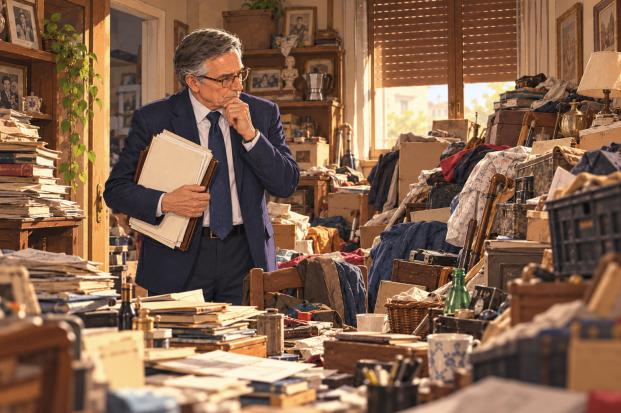
Over the course of my career, I have often had to enter the home of someone who was no longer alive. Sometimes I was accompanied by a spouse, sometimes by children or other relatives. Almost always, I was there to draw up an inventory.
It is work that can take several hours. You have to examine the furniture, open wardrobes, look through drawers, describe objects and sometimes photograph them, alongside an appraiser who assesses their value.
Yet behind these seemingly technical procedures lies something I have never ceased to find profoundly moving.
Very often, those homes have remained exactly as the person who lived there left them.
There are still dishes in the sink, a coffee cup on the draining board. A few things remain in the refrigerator, perhaps bought only weeks earlier. In the bathroom, there is a bar of soap, a comb, a brush, bottles of perfume, towels hanging on their hooks.
Everything is in its place.
Only the person is missing.
And yet, somehow, that person still seems to be there. You can sense their presence in every room, in every object, in the habits that these little things can still reveal.
Then you begin opening the drawers.
And that is when, almost without meaning to, you truly enter someone else’s life.
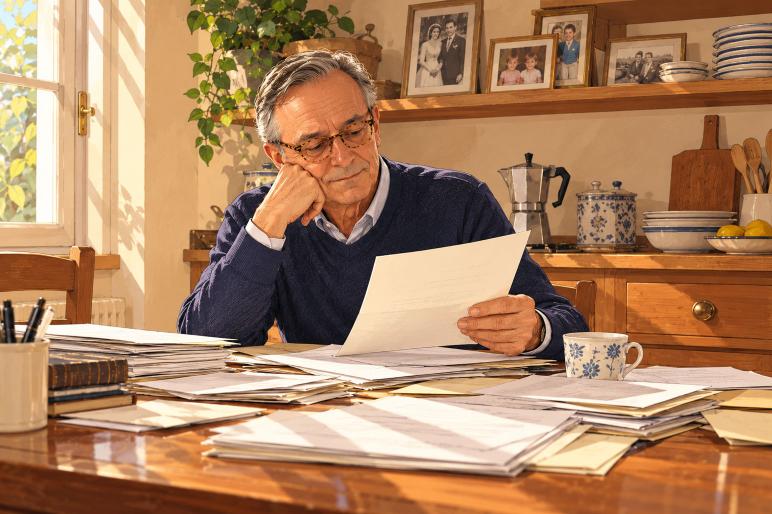
You find electricity bills, letters from the bank, old receipts, documents kept for decades. But you also find things with no monetary value whatsoever, which clearly meant the world to the person who kept them.
Not long ago, I came across the school reports from all five years of primary school belonging to someone who was now well over seventy. Every one of them was still there, carefully preserved alongside certificates of school achievement.
In other homes I have found old greeting cards, mementoes from the Fascist era, medals from the First or Second World War, wedding favours, yellowing photographs, letters and small objects lovingly kept safe.
Fragments of entire lives.
I remember particularly the home of a woman who, I believe, had never married and who had devoted much of her retirement to travelling.
She had a shelf filled with large envelopes, all neatly arranged. On each one she had written, by hand, the name of a place and the year of her visit.
Istanbul 1967. Cyprus 1968. Sharm el-Sheikh 1969. Greece…
Inside were dozens upon dozens of printed photographs.
There she was, smiling with her friends. On a ship, in front of a monument, sitting at a café table, on the beach. There were hotels, landscapes, people whose names, in all likelihood, no one remembered any more.
I stopped to look at them.
That woman, whom I had never met, was telling me part of her story. Her travels, her friendships, perhaps the happiest years of her life.
And there I stood, in front of those envelopes, leafing through memories she had gathered and cherished throughout her lifetime.
In other wardrobes I have found bridal trousseaux that had never been used. Linen tablecloths, embroidered napkins, sheets still wrapped in tissue paper, put away with almost heartbreaking care.
Things prepared many years earlier for a life that had perhaps forgotten them. Saved for special occasions, for a particular day that might never have come.
And then there were skis, ski boots, fishing rods, clothes for special occasions, dinner services, the good cutlery, brought out only when guests came to visit.
Every object tells a story.
And that is precisely what makes these assignments so difficult, at least on a human level.
Because you are there to do your job. You must open, look, search, describe and assess.
But somewhere inside, you feel a kind of embarrassment.
You have the sense of entering someone’s private world without permission. Of opening drawers that person might never have allowed a stranger to open. Of reading, even unintentionally, a few pages of a life that is not yours.
And as you do so, you almost feel the need to apologise.
You are not a relative, nor a friend. More often than not, you have never even met that person.
Yet within a few hours, you come to know them through what they have left behind.
You begin to sense their habits, their passions, their weaknesses, a touch of vanity perhaps. You discover how they dressed, what sports they enjoyed, where they liked to go on holiday, what they kept on their bedside table, which books they read, which memories they chose to preserve.
Even the arrangement of the bedroom, a folded blanket or a pair of slippers beside the bed can tell you something about the way they lived.
It is like watching a film racing past, except that the images pass through your hands rather than before your eyes.
And there is another thought, perhaps the most painful of all.
You know that, in all likelihood, almost everything you are looking at is destined to disappear.
The house will be sold. The furniture will be taken away. House-clearance firms and second-hand dealers will arrive; someone will take the things that still have value.
The rest will almost certainly end up at a rubbish tip.
The old school reports, the holiday photographs, the postcards, the keepsakes, the little objects preserved for decades may, overnight, become nothing more than things to throw away.
What was a treasure to one person may mean nothing at all to those who come after.
And that does not necessarily mean a lack of affection. It is simply that every life gathers more memories than those left behind can reasonably preserve for ever.
But as the years have passed, I have begun to understand that something else happens in those houses, too.
My profession has often brought me across the paths of people I had never known. And on occasion it has allowed me to come astonishingly close to them, even after they were gone.
Because, when I think about it, after spending a few hours in those rooms, opening their wardrobes, looking at their clothes, turning the pages of their photograph albums, discovering the passions, journeys and small keepsakes preserved throughout a lifetime, I almost feel as though I have actually met them.
As though, somewhere along the road, we had happened to stop at the same café, sat at the same little table and shared a coffee.
As though, through the objects they left behind, they had told me something about themselves.
And perhaps it is precisely at moments like these that, without even realising it, I set aside my professional role for an instant.
Of course, I remain a notary, with all my duties and responsibilities. But within me, the human being simply takes over.
I feel a little like a pilgrim who, travelling along his own road, encounters another traveller.
It does not matter that our journeys belong to different times. For a few hours, our paths have crossed. I have been able to gather a few traces of their passage through life, to learn something of their joys, their habits and their affections.
And perhaps, without either of us ever knowing it, for one brief moment we have walked together.
It is a difficult feeling to explain.
Because that person can no longer speak to you, can no longer tell you their story, can no longer explain why they kept a school report for sixty years or why they put away with such care a tablecloth they never used.
And yet, in a way, that is exactly what they are doing.
They are telling you the story of their life without uttering a word.
And you, who entered that house to carry out a professional duty, end up becoming the silent witness to a life.
Then the work comes to an end.
You close the drawers, say goodbye to the family, step outside and leave the door behind you.
You know that it is not your place to hold on to those things. They are not yours, and their fate will follow a course over which you have no control.
But sometimes, without ever intending to, you take something away with you all the same.
The memory of a photograph, a school report, an old tablecloth still wrapped in paper.
And above all, the feeling of having met someone you had never known.
Someone who, for a few hours, let you into their life, although they could never have imagined that one day it would be you opening those drawers.
Looking back, I realise that among the many people I have encountered in my long career, there are these people too.
People whose hands I never shook, with whom I never exchanged a word, whose names I may not even remember.
And yet I feel as though I knew them.
Because sometimes, along the way, you do not have to meet someone in person to feel close to them.
It is enough, even for a single moment, to have held an entire life in your hands.
Continue reading